The Invisible Impact of COVID-19: Hypermobility, Neurodivergence and Burnout
At the RSM, Dr Minha explored the ‘invisible’ overlap of hypermobility, neurodivergence, dysautonomia, mast cell disease and Long Covid.
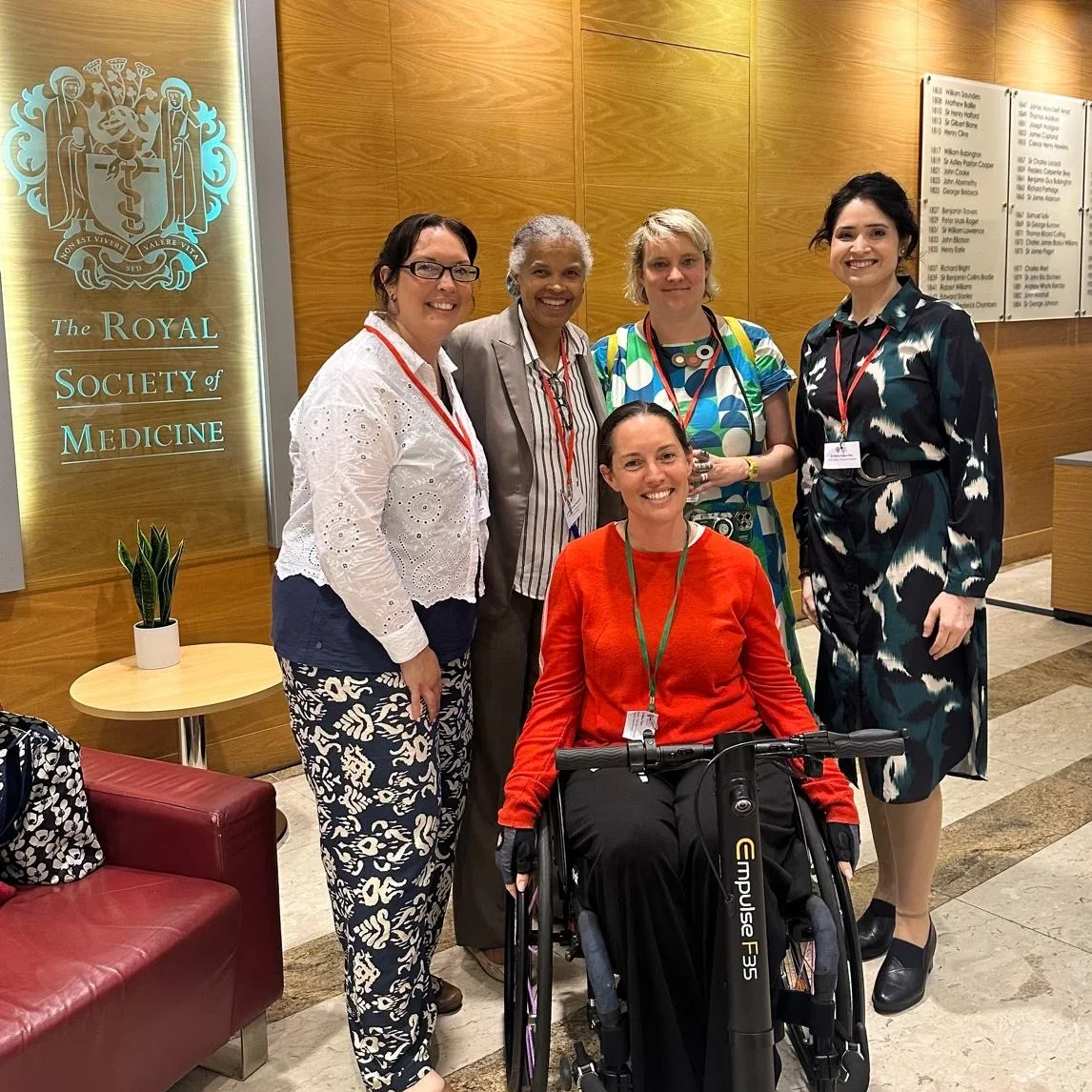
On 11 July 2025, Dr Minha joined colleagues at the Royal Society of Medicine for “The Invisible Impact of COVID-19 on Hypermobility Syndromes and Neurodivergence, Bodies, Brains and Burnout,” a conference held by the RSM’s Rheumatology and Rehabilitation Section in association with SEDSConnective, the charity for neurodivergent people living with hypermobility, led by its chair Jane Green MBE.
The premise of the day was itself the point. Conditions that medicine has long treated in isolation were shown, speaker by speaker, to be deeply interconnected: joint hypermobility and the Ehlers-Danlos syndromes, dysautonomia and PoTS, mast cell activation syndrome, fibromyalgia, ADHD and autism, gastrointestinal dysfunction, Long Covid, and the professional burnout that shadows so many who live with, or treat, these conditions. It is what Dr Minha calls the “boom or bust” cycle: a nervous system that flies at something wholeheartedly until, quite suddenly, it has nothing left. The programme brought together an exceptional faculty, including Professor Anne Maitland on the immunology of mast cell disease, Dr Jessica Eccles of Brighton and Sussex Medical School, who speaks openly about her own ADHD, on the links between hypermobility and neurodivergence, Professor Melvin Lobo on dysautonomia and Long Covid, Professor Qasim Aziz on the gut, and Dr Alan Hakim on the latest in EDS and hypermobility spectrum disorders.
Dr Minha is pictured with Professor Maitland, Dr Eccles and colleagues, and for her, the conference was a kind of homecoming. This “totality” view, in which a patient’s joints, nervous system, immune response, gut and mind are understood as one connected system rather than a list of unrelated complaints, is precisely the lens she brings to every consultation. The connections made that day continue through her ongoing collaborative work, including research carried out in genuine partnership with patient representatives.
These overlapping, often dismissed presentations are exactly the patients Curaidh Clinic exists for. The clinic’s integrative model was built on the same insight the conference set out to prove: that the conditions modern medicine finds hardest to explain are so often hiding in plain sight, connected all along.