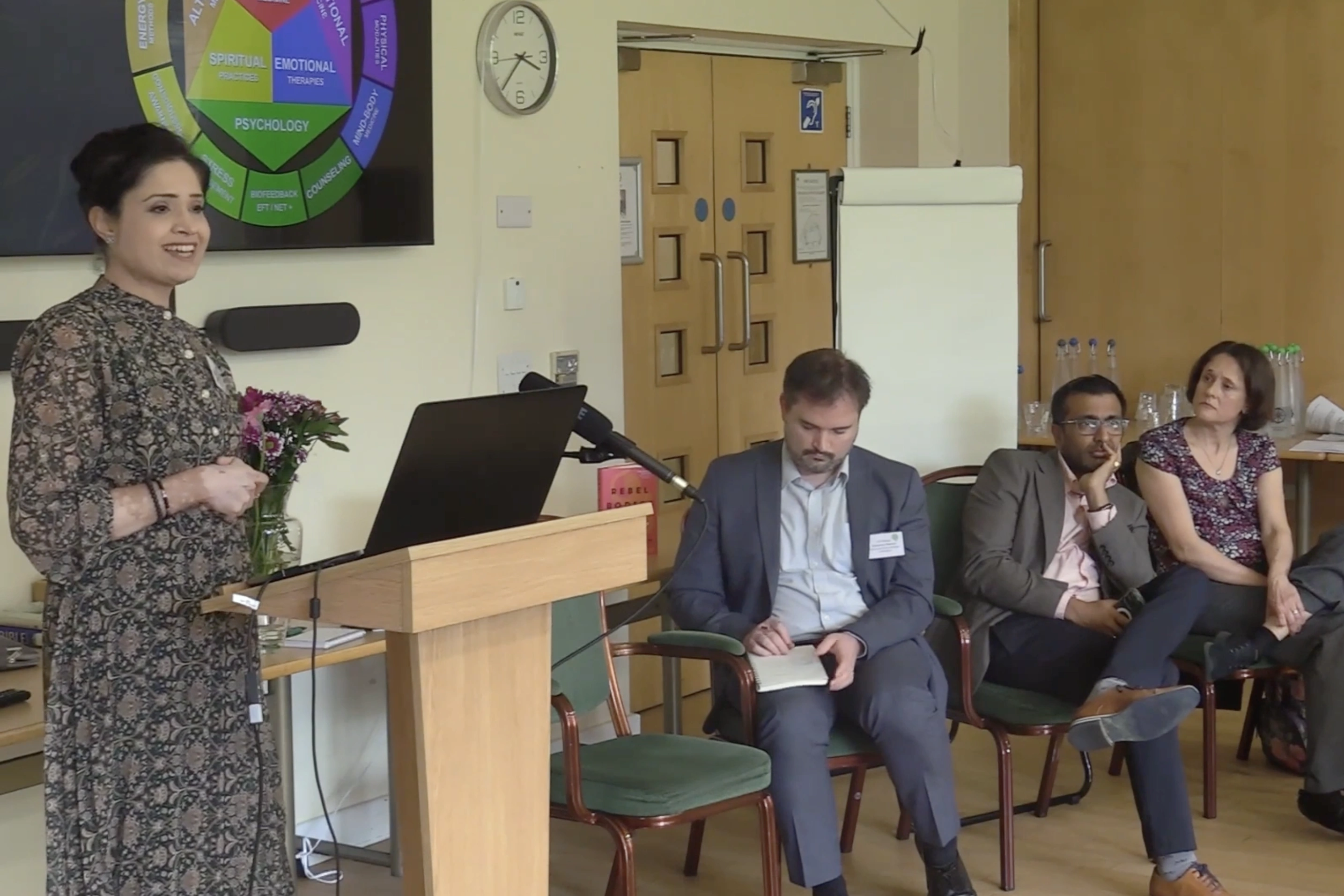
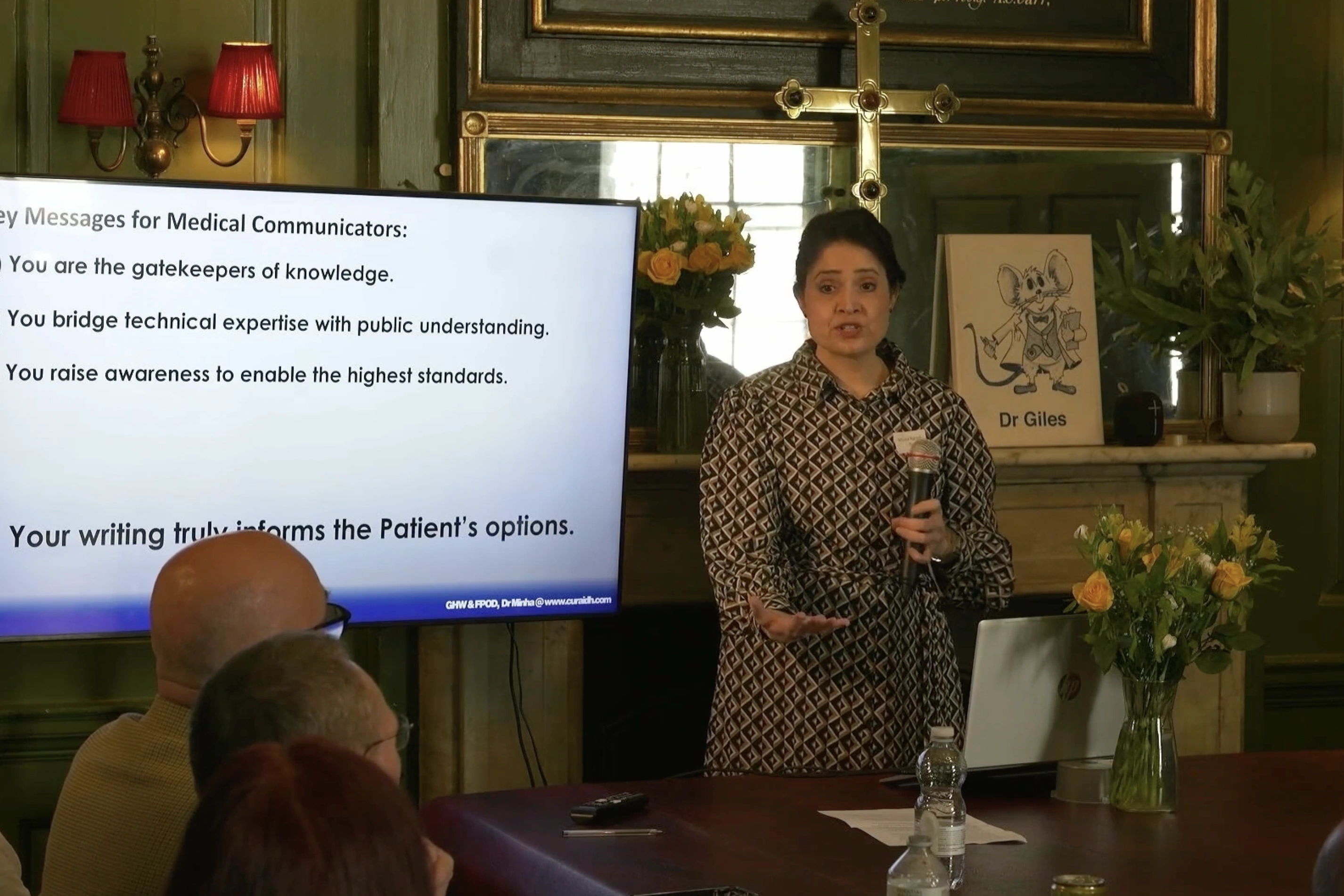
Dr Minha joined Dr Adrian Tookman for “The physician’s perspective: the importance of patient stories and diagnostic uncertainty”, a session at Overlooked Diseases and Lost Health Solutions, the webinar held by Forgotten Patients, Overlooked Diseases (FPOD) on 14 December 2022.
FPOD exists for the patients healthcare finds hardest to help: people living with medically unexplained symptoms, rare and overlooked diseases, and complex conditions that fall between specialties. The charity brings GPs, hospital consultants, researchers, health writers and patients together to develop resources, support research and improve education, because, in its own words, some people with undiagnosed complex symptoms are simply forgotten in the system. Dr Tookman, a retired consultant in palliative medicine and one of FPOD’s founding members, has been central to that mission.
Joined in their session by patient storyteller Christianne Forrest, he and Dr Minha explored two things modern medicine too often rushes past: the diagnostic power of genuinely listening to a patient’s story, and the honesty required to acknowledge uncertainty rather than dismiss what cannot yet be explained. For patients who have spent years being told their test results are “normal”, and for clinicians navigating diagnostic doubt in short consultations, the conversation remains as relevant now as the day it was recorded. Across its six sessions the webinar also heard from speakers including Chantal Patel on the ethics of care, a thread that has run through FPOD’s meetings ever since.
Much of their conversation turned on the danger of the wrong label. Dr Tookman described how patients with genuinely rare conditions are too often told their problems are merely “functional”. He gave the example of Klippel-Trénaunay-Weber syndrome, where a targeted medicine such as sirolimus can change a life once the diagnosis is finally made. The correct label, both argued, is far from bureaucracy: it unlocks the right treatment, and the social and financial support a patient is otherwise denied.
Their remedy was disarmingly simple: celebrate uncertainty rather than conceal it. Saying “I don’t know” should be a mark of good practice, not weakness; taking a history should be art as much as science; and clinicians should give patients the time, and the permission, to tell their story. Dr Minha offered a metaphor she still uses in her own clinic: the clinician as the sat-nav and the patient in the driving seat, looking ahead together and glancing back only to learn.
They were candid, too, about why such conditions stay overlooked. Research funding, Dr Minha observed, tends to follow the loudest voices, leaving patients with rare, “Cinderella” or as-yet-unlabelled conditions the least able to campaign for the very research that might help them. Both saw a role here for medical writers and communicators: to become the voice of patients who go unheard, and to help draw scattered, underfunded research together into something clinicians and patients can actually use.
The 2022 webinar marked the beginning of Dr Minha’s ongoing collaboration with FPOD, to which she gives her time pro bono as a medical advisor. It is a partnership that has since spanned conferences at the Royal Society of Medicine and the Royal College of Physicians, and one that reflects Curaidh Clinic’s founding purpose: guiding patients through the maze of unexplained medical conditions, persistent pain and fatigue syndromes.
Explore the full event: Overlooked Diseases and Lost Health Solutions, 14 December 2022